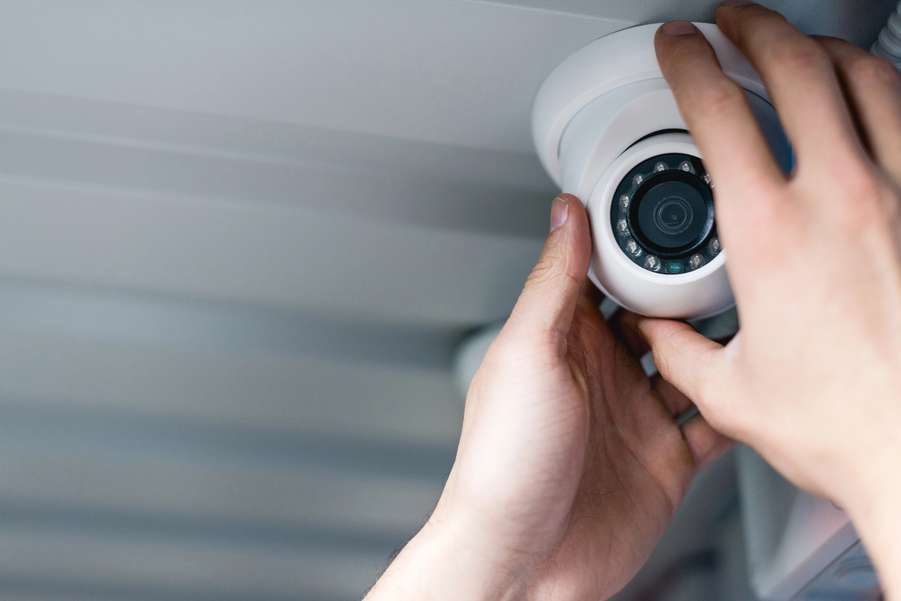
Identify Potential Weak Points in Your Security and How to Address Them
You have security cameras installed at several points throughout your home, sensors on the windows, and apps that work on your phone. Additionally, there's a sign in the yard warning potential interlopers. Everything looks good. But how much protection does that setup actually provide?
The truth is, many residential security systems have gaps homeowners never notice—until something goes wrong. Weak network connections, poorly placed cameras, and a lack of backup power can all leave your home more vulnerable than you realize. The difference between a system that just looks secure and one that actually performs comes down to the details: how it's configured, where it's installed, and what happens when conditions aren't ideal.
Here's what to look for when evaluating your current setup—and what professional-grade protection really means.
Network and Encryption Weaknesses
Most consumer security devices connect through your home Wi-Fi—the same network your kids use for gaming and your laptop uses for streaming. That's a potential problem. When cameras and sensors share bandwidth with everyday devices, performance suffers. Worse still, basic routers often lack the encryption strength necessary to keep video feeds and alarm signals private.
Outdated protocols and weak passwords make systems vulnerable to interference or interception. A security camera that broadcasts on an unsecured channel isn't much of a security camera at all.
Professional installations address this with dedicated network segmentation. Your security devices operate on their own protected channel, separate from household traffic. Enterprise-grade networking equipment—like Araknis systems—provides stronger encryption and more reliable connections. The result is a security backbone that doesn't compete with Netflix for bandwidth and doesn't broadcast your footage to anyone listening.
Camera Placement and Blind Spots
A camera mounted in the wrong spot is barely better than no camera at all. Too high, and you capture the tops of heads. Aimed at a walkway but missing the side gate, and you've got a gap. These blind spots aren't obvious until you review footage after an incident—when it's too late.
Strategic placement starts with understanding how people actually move through your property. Entry points, windows, driveways, and high-value areas all need coverage. Outdoor cameras require weatherproofing and proper night vision to function effectively in rain or low-light conditions. Indoor cameras work best when they monitor points of access rather than random rooms.
Professional integrators walk your property before installing anything. They identify angles that maximize coverage and minimize dead zones. Brands like IC Realtime and Luma offer the resolution and durability needed for reliable monitoring—but only when positioned correctly.
Power and Communication Backup
Storms knock out power. Internet connections drop. These are exactly the moments when your security system needs to work—and exactly when many systems fail.
Without battery backup, your cameras and sensors go dark the second the power cuts. Without cellular communication, your alarm system can't reach monitoring services when Wi-Fi disappears. That's a serious gap.
Professional-grade panels include built-in cellular radios that maintain contact with monitoring centers regardless of your internet status. Battery backups keep everything running during outages—sometimes for 24 hours or more. Tamper-resistant enclosures protect the control panel itself from interference.
These aren't extras. They're the difference between a system that works on good days and one that holds up when conditions get rough.
Protection that Performs
Real security isn't about having the most devices—it's about how those devices work together. Encrypted networks keep your data private. Strategic camera placement eliminates blind spots. Backup power and cellular communication ensure the system stays online when you need it most.
When these layers are designed as a cohesive unit rather than pieced together from off-the-shelf products, you get protection that actually performs. Additionally, integrating security systems with smart lighting and motorized shading provides more options for enhancing your home’s privacy and security. Premier Visions configures and installs residential security systems with high levels of integration and attention to detail, configuring every component to work reliably under real-world conditions.
If you're questioning whether your current setup has gaps, it's worth finding out. Reach out for a professional security assessment and see where your home really stands.